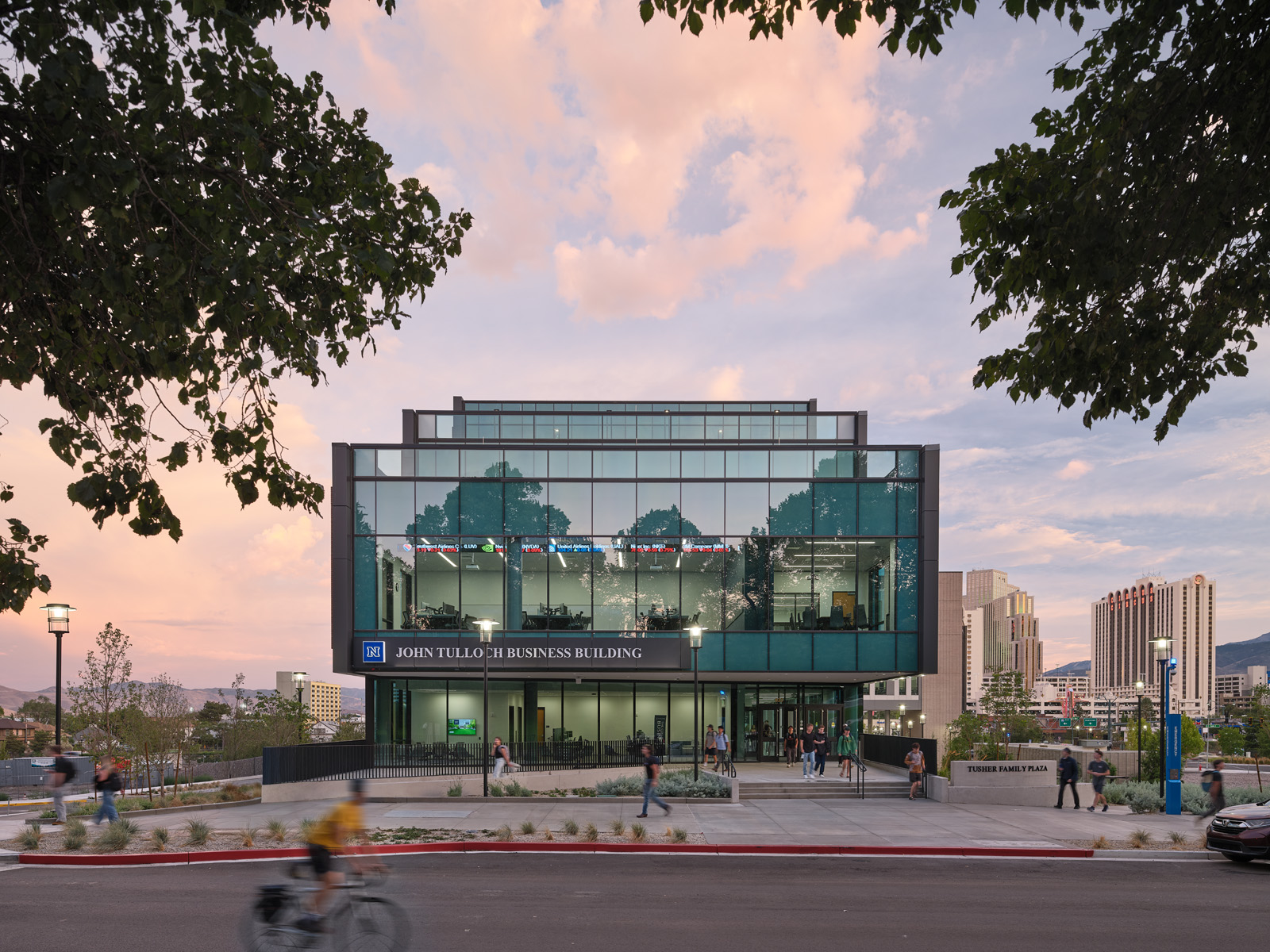
A generation ago, public infrastructure projects were measured by whether they opened on time and on budget. Today, they are increasingly expected to strengthen communities, support innovation, attract talent, and drive economic competitiveness.
For the past 25 years, Edgemoor Infrastructure & Real Estate has helped clients respond to that shift by delivering projects designed not simply for ribbon cuttings, but also for lasting community impact and optimized end-user experience.
Early on, the company was not talking about public-private partnerships in the way the industry does today. Instead, Geoff Stricker, co-founder of Edgemoor, said the business focused on bringing private sector real estate development expertise into public sector infrastructure delivery.
“We started with sort of a hypothesis that the skills that a traditional real estate developer would use to deliver buildings on their own account could be applied to the public sector,” Stricker said. “We set up a business based on what we called turnkey delivery to the public sector.”
At the time, that approach was still unfamiliar to many public owners accustomed to traditional design-bid-build procurement.
“Twenty-five years ago, it was very much an education process, because it was a very new concept,” Stricker said. “Most public buildings or roads were delivered by design-bid-build, and so coming in and saying, ‘I can manage the entire process, can take care of finding you this site, can take care of managing architecture and getting permits, financing, and long-term operations and maintenance’ was sort of a new concept for the public sector.”
Over time, the market evolved in the same direction Edgemoor had anticipated.
Where the public sector once asked, “What is this alternative approach?” owners today are increasingly asking, “What value can it deliver?” and "How can I solve this critical need that I have for my facilities?"
Edgemoor’s ability to help clients answer these questions has been central to the company’s continued growth and relevance as public-private partnerships have evolved from an emerging delivery model into an established strategy for tackling increasingly complex infrastructure challenges.
That shift has fundamentally changed how infrastructure projects are evaluated and delivered. For Edgemoor, success is no longer measured solely by whether a project is completed on time and on budget, although those fundamentals remain critical. Owners and communities are now more focused on the long-term outcomes projects create, and the daily impact on the end users who occupy the building.
“When I think of projects like the Kansas City airport (below) that we delivered, it was all about community impact,” Stricker said. “Obviously, we had to deliver a beautiful airport for a price and a schedule, but years later no-one’s going to remember that we delivered it for a price or on time. People are going to remember: Did it deliver on its promises to the community? Did it drive new economic development? Did it create the workforce of the future? Was there legacy impact?”
Edgemoor confirms that, in the case of Kansas City, the answer is a resounding YES.
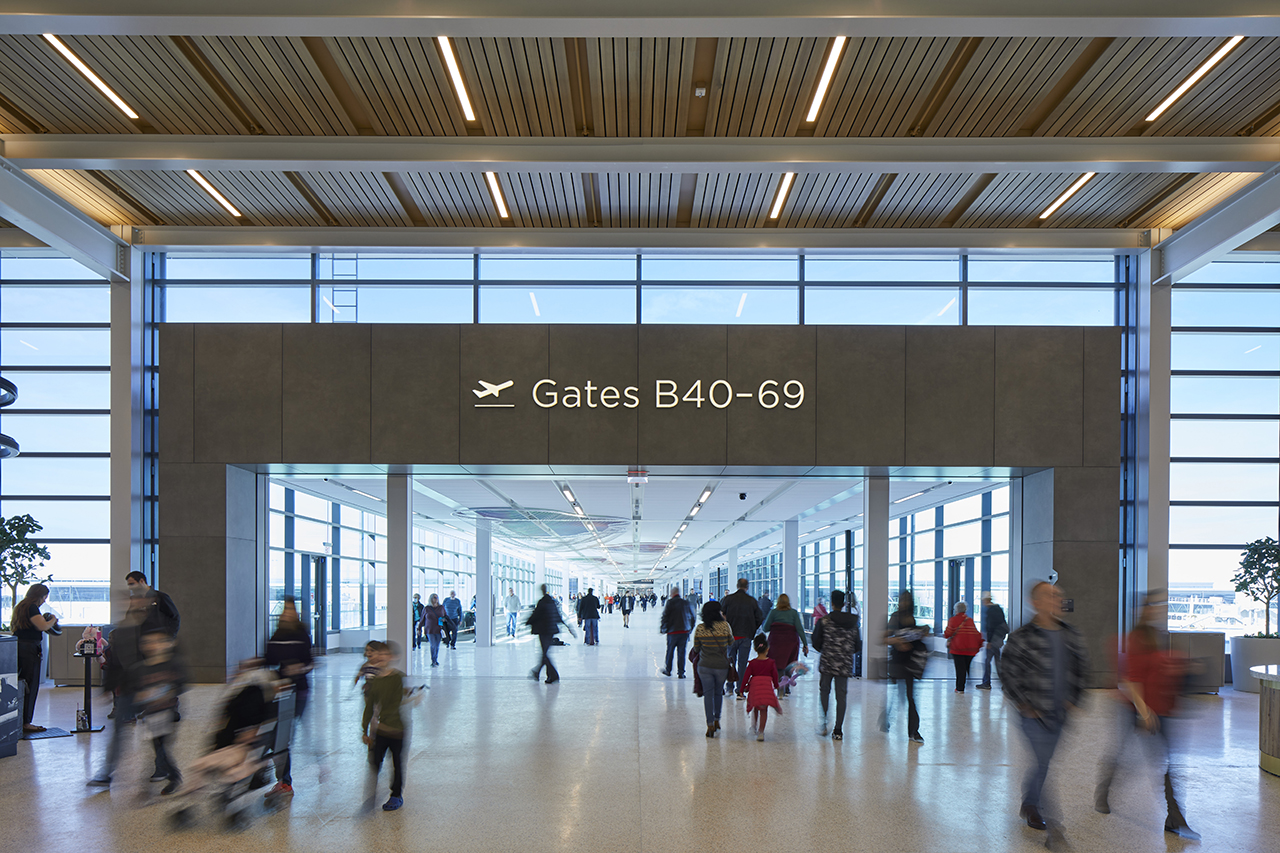
Picture credit: Lucas Blair Simpson ©SOM
That broader view of infrastructure is particularly evident in Edgemoor’s work in higher education and innovation districts, where projects are increasingly designed not just as facilities, but as platforms for collaboration, talent development, and economic growth.
Over the past 15 years, the firm has focused on projects that intentionally bring together academia and industry to accelerate research commercialization and innovation. At projects such as George Mason University’s Fuse at Mason Square and the Sandler Neurosciences Center, Edgemoor designed environments intended to encourage interaction among researchers, students, and private sector partners.
“We purposely designed the building to force collaboration,” Stricker said. “What you find is that people working on different applications suddenly begin talking and realize that combining their ideas could lead to something entirely new.”
While Edgemoor’s portfolio spans airports, civic infrastructure, higher education, sports, mixed-use development, and innovation districts, Stricker believes the principles behind successful delivery remain remarkably consistent across asset classes.
“We are big believers in that the first 10% of the decisions made impact 90% of the job,” he said.
That approach influences how the company engages projects from the earliest stages of planning and procurement. For Edgemoor, successful delivery depends on establishing trust, alignment, and transparency long before construction begins.
“It’s critical up front to be transparent with your clients, to establish a culture of collaboration, and to establish trust between the public and the private sectors,” Stricker said. “It’s critical to be good listeners to hear what our client is trying to accomplish and what’s important to them.”
That early collaboration has become increasingly important as projects grow more technically, financially, and politically complex. Owners today are balancing operational requirements, stakeholder expectations, lifecycle costs, community priorities, financing considerations, and future flexibility simultaneously.
“There are so many pieces of the puzzle that you have to make sure all work together,” Stricker said. “If you get one wrong, the whole thing falls apart.”
Stricker also noted that the evolution of procurement models themselves reflects that growing complexity. In particular, he pointed to the increasing use of progressive and pre-development agreements as examples of how owners and private partners are working together earlier in the process to solve problems collaboratively, before projects advance into full delivery.
For Edgemoor, that emphasis on alignment also reflects the company’s long-term stewardship philosophy.
“We like to think about the life cycle of a building,” Stricker said. “Once a building is delivered, it’s going to live in a community or on a college campus for 30, 40, 50 years, and it’s critical to make sure that the building far out in the future is still operating in a manner that is first class.”
That perspective influences everything from operational planning to future adaptability. In science and research environments particularly, Edgemoor often plans for technologies and infrastructure needs that may not fully exist yet.
“One of the things we do is bring our operations team into the design process,” Stricker said. “As we’re designing the building, we are thinking about what is best for operations over time.”
As infrastructure delivery continues to evolve, technology and artificial intelligence are also beginning to reshape how projects are analyzed and planned. Stricker sees AI as a valuable tool for improving efficiency in areas such as due diligence, site analysis, and zoning reviews, but he believes the core of successful project delivery remains deeply relationship-driven.
“Nothing beats face-to-face client interaction,” he said. “Sitting in a room and talking is fundamentally important.”
The same principles that shape Edgemoor’s project approach also influence how the company builds its teams and develops future leadership. Over the past 25 years, the firm has expanded from a two-person founding team into a national organization operating across multiple regions and sectors. Throughout that growth, maintaining an entrepreneurial culture has remained central to the company’s identity.
“We really want people to embrace the ownership mindset,” Stricker said. “We want people who understand the work they do every day matters.”
As Edgemoor looks toward its next chapter, Stricker believes the infrastructure market will continue moving toward greater collaboration, life cycle planning, and more integrated partnerships between the public and private sectors.
In many ways, that trajectory reflects the same principles that have guided Edgemoor from the beginning. Get the foundational decisions right, build trust early, and focus on outcomes that endure long after construction is complete.
Originally published by P3 Bulletin, June 23, 2006.