
Civic infrastructure occupies a distinctive place in public life. Civic buildings are where justice is administered, public safety is coordinated and communities connect with government. They are places where design is visible, function is immediate and, in many cases, represent the most significant investment a public owner will ever make. The Howard County Circuit Courthouse in Maryland offers a compelling example. During a recent tour, a Maryland Department of Transportation official walked into the building, looked around and remarked, "This is P3! This is P3!" He was amazed at how, after five years, the courthouse looked brand new.
For decades, projects were judged by familiar benchmarks. Was the project delivered on time? Did it stay on budget? Was it built as planned?
Those questions remain essential, but they are no longer enough. Increasingly, public owners are asking different questions: Are we building the right asset?
Are we building it to last?
"Anyone can build what is on the drawings," said Brian Dugan, Partner at Edgemoor Infrastructure & Real Estate. "The harder question is whether the drawings reflect the right vision in the first place."
Public owners have always wanted projects that serve their communities well, operate efficiently and stand the test of time. What has evolved is their willingness to think differently about how those outcomes are achieved. Today, owners expect their partners to contribute more than technical expertise. They want teams that will ask difficult questions, examine competing priorities and work alongside them to find the best answer. They also recognize the added value of an integrated delivery team led by a developer.
That shift has changed expectations on both sides of the table. Success is no longer measured solely by delivering what was specified. It is defined by the quality of the thinking that takes place before construction begins.
At Howard County, that process began well before construction. Delivered as a public-private partnership, the courthouse provided an opportunity to rethink not only how the facility could be built, but how critical decisions could be made.
Rather than moving directly toward financial close after its contract was approved by Howard County, the Edgemoor-Star America Judicial Partners project company chose to widen the conversation to ensure the new courthouse would meet the needs of all its users. Edgemoor introduced an expanded program validation phase wherein Edgemoor and the county brought judges, the Sheriff's Office, the Clerk of the Courts, the State's Attorney's Office and other end users into the design process while meaningful decisions could still be made.
The process ensured alignment among end users on the vision before financial close while also mitigating the risk of delays to the design schedule.
Since the facility's cost was fixed upon selection, decisions during design development required balancing competing priorities. An additional door in one location might require eliminating one somewhere else. Departments advocated for their own needs, but each discussion was viewed through the lens of the courthouse as a whole. The collaborative team always saw the forest through the trees.
"Edgemoor, Howard County, the Circuit Court, and the P3 framework supported a collaborative culture for the project. When a challenge arose, it was never a single member's challenge; rather, it was our collective challenge to solve," said Judge Lenore Gelfman, Senior Judge and former Administrative Judge in Howard County, MD. "All parties were vested in a 'one team' approach so as to ensure a Courthouse which was safe, dignified, functional as well as beautiful. A Courthouse prepared to deliver access to justice for all who came.”
The P3 framework, with a developer leading an integrated team, created the opportunity to consider those decisions from every angle, including their implications for long-term operations and maintenance.
As a result, Howard County became more than a successful courthouse. It validated a different approach to civic project delivery and gave public owners greater confidence that involving partners earlier in the process could produce better outcomes.
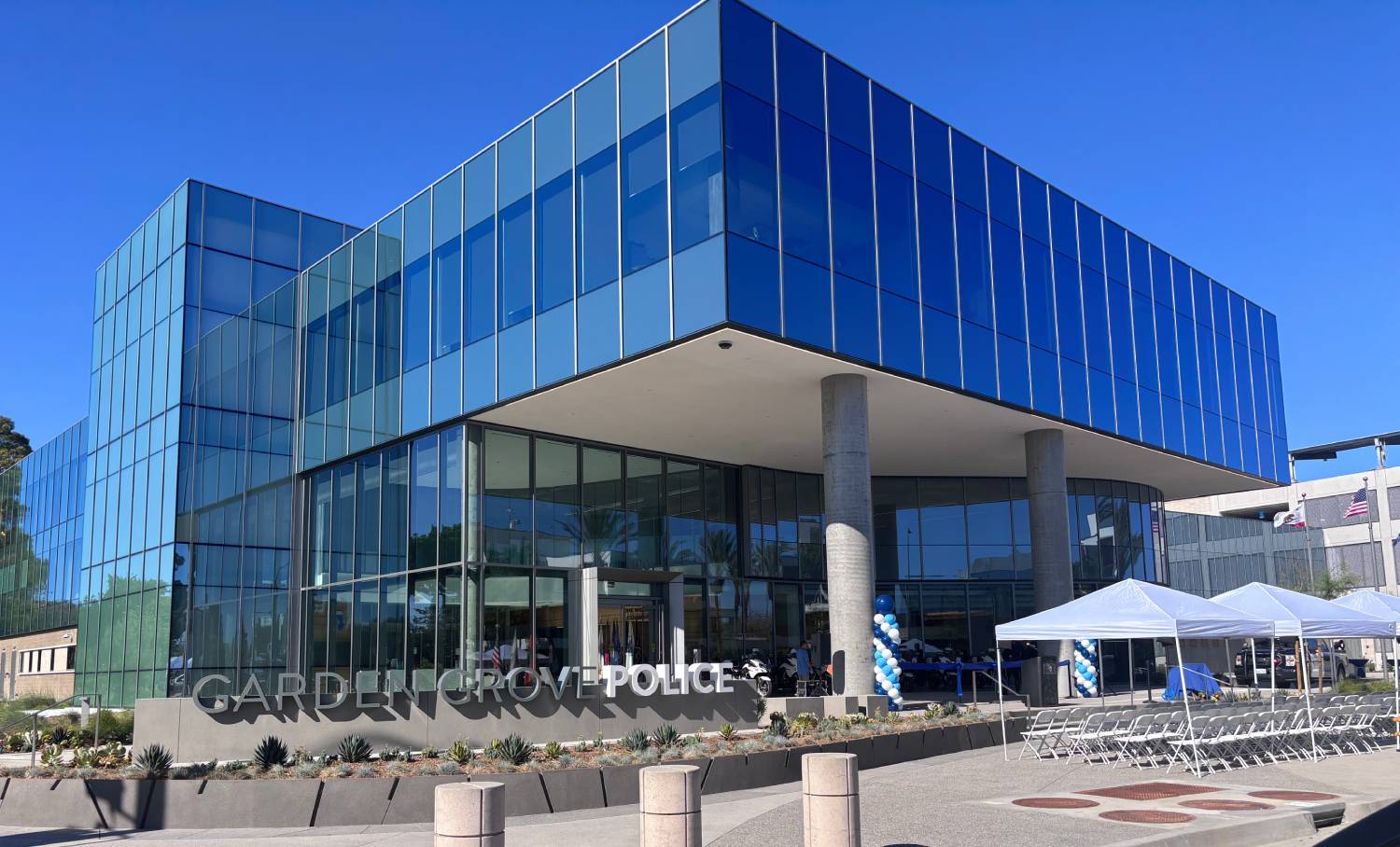
As Howard County marks five years of successful operation, another milestone in civic infrastructure is taking shape across the country. In California, Phase 1 of the Garden Grove Civic Center Revitalization Project, a new Police Department Headquarters Building and parking garage, opened ahead of schedule in late August.
Together, the two projects illustrate how the civic infrastructure P3 model has matured, along with the role of the developer. Increasingly, development teams bring a real estate perspective to the conversation, looking not only at individual buildings, but at how public assets work together.
At Garden Grove, that broader view extends beyond the new police headquarters. The project also includes a new public park that reconnects City Hall, police facilities, a public library and community gathering spaces, creating a civic hub designed to serve both government operations and the public. Procured through a progressive approach as a developer-led design-build-finance project, the delivery model allowed key decisions about the facility and surrounding public spaces to be considered as part of a larger civic vision.
"This public-private partnership gave Garden Grove a collaborative way to move a complex project forward quickly while keeping our operational needs, design standards and long-term vision at the center," said Garden Grove Mayor Stephanie Klopfenstein. "The result is more than a new public safety facility. It is the foundation of a revitalized Civic Center that will serve our community for generations."
For Dugan, Howard County and Garden Grove represent different stages in the industry's evolution. One helped demonstrate the value of broader collaboration. The other reflects how that approach, and the expanded role of the development partner, has become the norm as owners seek more holistic solutions to complex civic challenges.
"Owners have always wanted exceptional buildings," Dugan said. "What's changing is how they are being procured and the expectation that the development team will help create them, not simply deliver them. That's where the greatest value is realized."
Originally published by P3 Bulletin, September 10, 2026.


